Understanding the salad dressing vs mayonnaise comparison is important for food businesses, restaurants, and entrepreneurs planning to start a condiment production unit. With advanced equipment such as a Mayonnaise Making Machine, manufacturers can efficiently produce both mayonnaise and salad dressing while maintaining consistent quality. With modern food processing equipment from Divy-Om Process Machinery & Equipment , manufacturers can efficiently produce both mayonnaise and salad dressing with consistent quality and texture.
What is Mayonnaise?
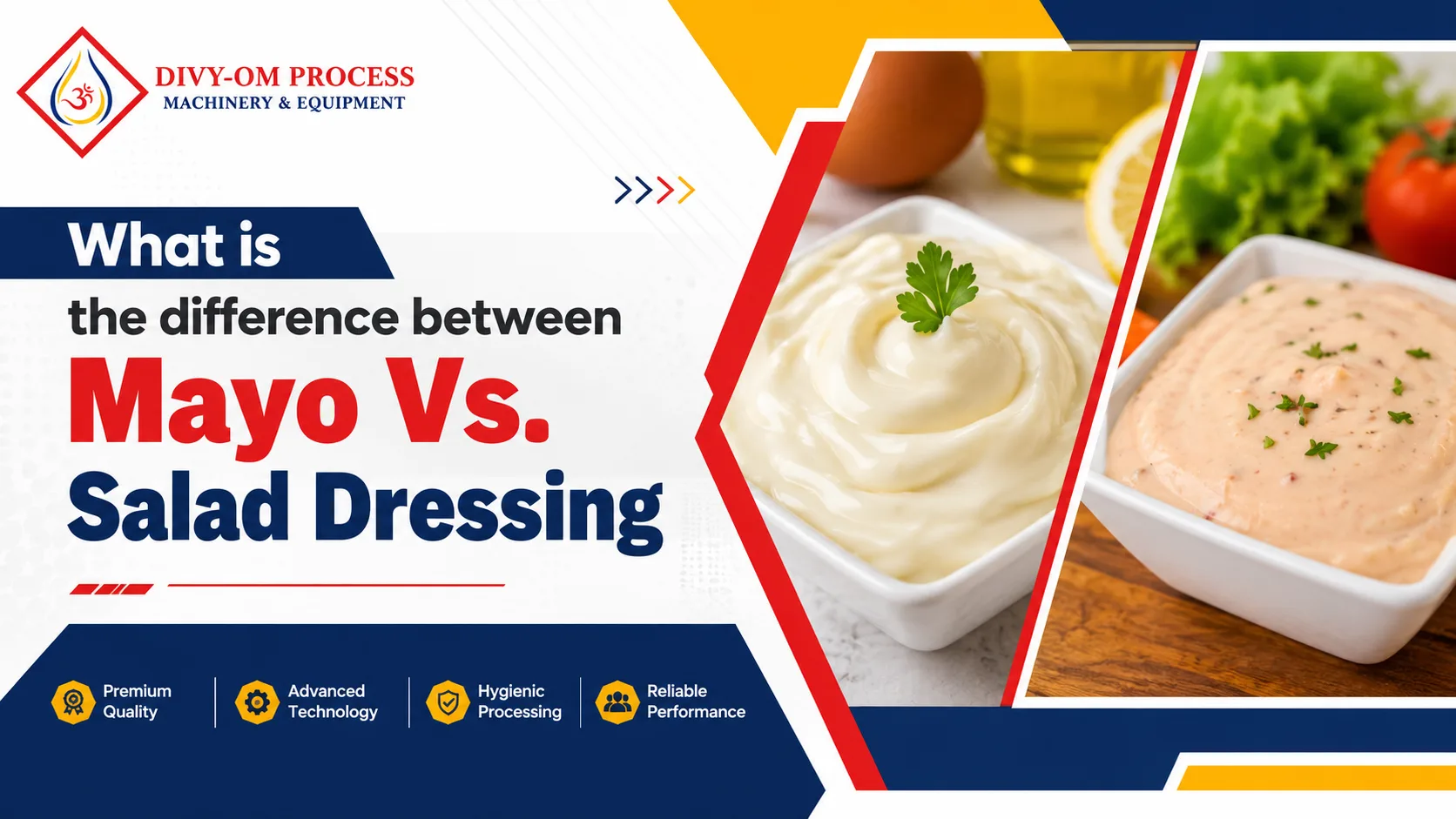
Mayonnaise is a thick, creamy emulsion made primarily from vegetable oil, egg yolk, vinegar or lemon juice, and seasonings. The egg yolk acts as an emulsifying agent, helping oil and water-based ingredients blend together smoothly.
Because of its high oil content, mayonnaise has a rich and creamy texture with a slightly tangy flavor. It is widely used in sandwiches, burgers, dips, and various salad recipes.
What is Salad Dressing?
Salad dressing is a mayonnaise-like condiment that usually contains less oil and egg content than traditional mayonnaise. Manufacturers often add starch, water, sugar, vinegar, stabilizers, and flavor enhancers to create a lighter and sweeter product.
Due to these ingredients, salad dressing is generally sweeter, lighter, and more economical to produce than mayonnaise.
What Is the Difference Between Mayonnaise and Salad Dressing?
When discussing what is the difference between mayonnaise and salad dressing, several factors distinguish these products.
1. Oil Content
- Traditional mayonnaise contains a higher percentage of vegetable oil, often above 65%.
- Salad dressing generally contains less oil and includes water, starches, and stabilizers to achieve its consistency.
2. Texture
- Mayonnaise has a thick, rich, and creamy texture due to its high oil content and emulsification process.
- Salad dressing is comparatively lighter and smoother, making it easier to spread and mix with salads.
3. Taste
- Mayonnaise usually offers a rich and tangy flavor.
- Salad dressing tends to be sweeter and milder because of added sugar and flavor enhancers.
4. Ingredients
Mayonnaise typically contains:
- Vegetable oil
- Egg yolk
- Vinegar or lemon juice
- Salt and spices
Salad dressing may contain:
- Vegetable oil
- Water
- Starch
- Sugar
- Milk solids
- Preservatives
- Stabilizers
- Flavoring agents
5. Cost of Production
- Salad dressing generally costs less to manufacture because it contains lower oil content and more economical ingredients.
- Mayonnaise requires more oil and premium ingredients, resulting in higher production costs.
Difference Between Mayonnaise Vs. Salad Dressing
| Point | Mayonnaise | Salad Dressing |
|---|---|---|
| 1. Oil Content | High oil content | Lower oil content |
| 2. Texture | Thick and creamy | Light and smooth |
| 3. Taste | Rich and tangy | Mild and slightly sweet |
| 4. Main Ingredients | Oil, egg yolk, vinegar | Oil, water, starch, sugar |
| 5. Cost | More expensive to produce | More economical |
| 6. Common Use | Sandwiches, burgers, dips | Salads, spreads, dressings |
Is Salad Dressing the Same as Mayonnaise?
Many consumers wonder if salad dressing is the same as mayonnaise because both products appear similar in color and consistency. However, they differ significantly in composition and flavor profile.
Mayonnaise is considered a true oil-and-egg emulsion with a richer taste. Salad dressing, on the other hand, contains additional ingredients such as starches and sweeteners that alter its texture and flavor. Although they can sometimes be used interchangeably in recipes, they are technically different products.
Applications in the Food Industry
Both mayonnaise and salad dressing have extensive applications across multiple sectors.
- Restaurants and Cafes: Used in sandwiches, burgers, wraps, and salads.
- Fast Food Chains: Essential ingredients for sauces and dips.
- Catering Businesses: Provide flavor enhancement for various dishes.
- Food Processing Industries: Used in ready-to-eat foods, packaged salads, and snack products.
- Retail Market: Available in jars, pouches, sachets, and bottles for household consumption.
Why Choose a Diyom Process Machinery?
Diyom Process Machinery is a trusted name in food processing equipment and solutions. Our company provides advanced machinery designed to meet the needs of modern food manufacturers. Whether you are starting a new condiment manufacturing business or expanding an existing production facility, Diyom Process Machinery offers equipment that helps maintain quality, productivity, and operational efficiency.
When exploring what is the difference between mayonnaise and salad dressing, mayonnaise is known for its rich and creamy texture, whereas salad dressing provides a lighter and often sweeter alternative. For businesses looking to manufacture these products efficiently, a high-quality Mayonnaise Making Machine is essential. With advanced equipment from Diyom Process Machinery, manufacturers can produce consistent, hygienic, and premium-quality mayonnaise and salad dressing products to meet growing market demand.