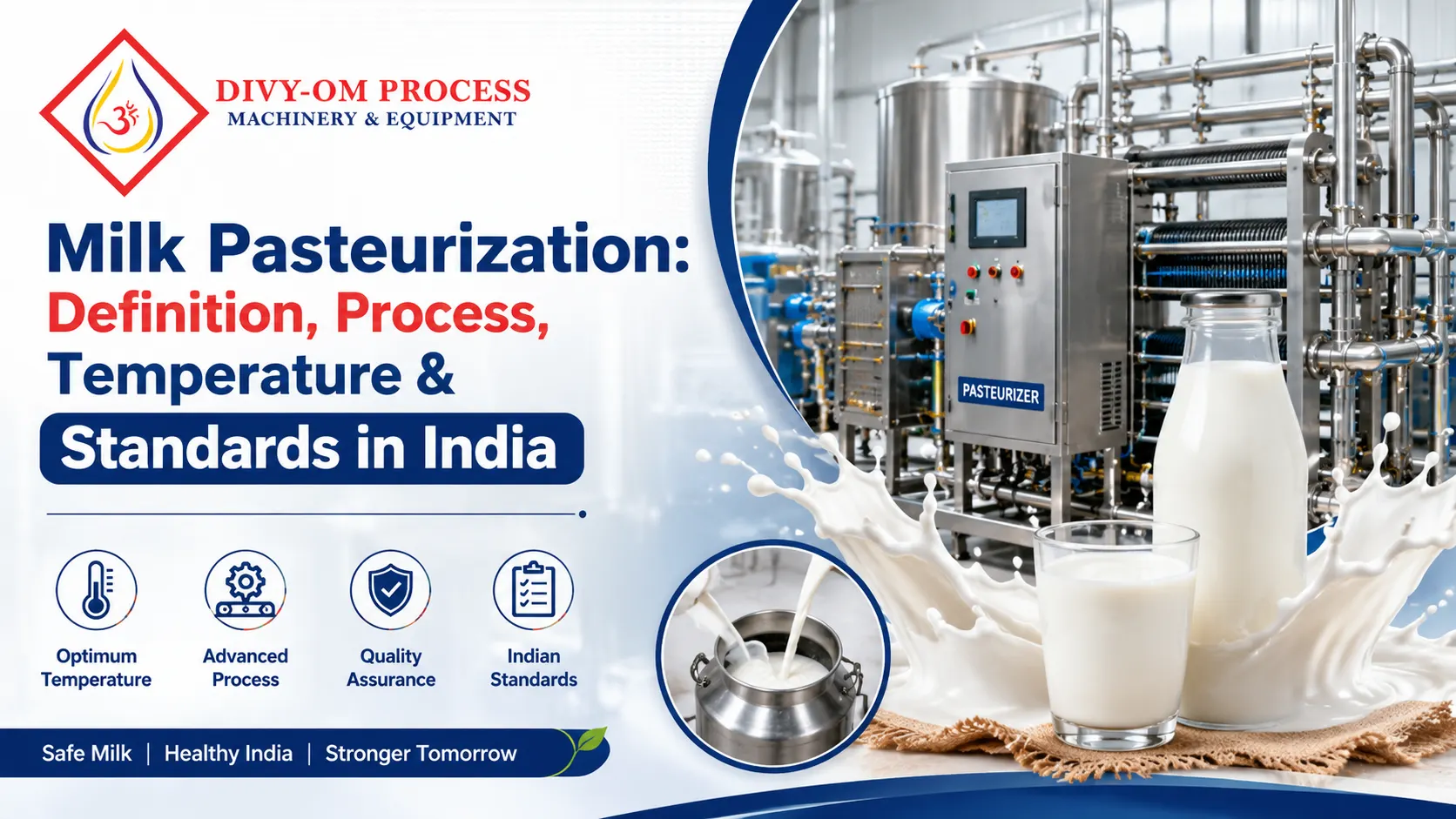
Divy-Om Process Machinery & Equipment is a trusted name in the dairy processing industry, offering advanced solutions for efficient milk pasteurization. As the demand for safe and hygienic dairy products continues to grow, pasteurization has become an essential process in every modern dairy plant. It helps eliminate harmful bacteria while preserving the nutritional value, taste, and quality of milk. Whether you operate a small dairy farm or a large commercial processing facility, we offer reliable milk pasteurization equipment designed to meet Indian dairy standards and deliver consistent performance.
What is Milk Pasteurization?
Milk pasteurization is a controlled heating process in which raw milk is heated to a specific temperature for a defined period and then rapidly cooled. The primary objective of the pasteurization of milk is to destroy harmful microorganisms such as Salmonella, Listeria, and E. coli, while maintaining the milk’s natural nutrients and flavor.
Developed by French scientist Louis Pasteur, this process has become a global standard for producing safe milk and dairy products.
Milk Pasteurization Process
The milk pasteurization process involves several carefully controlled stages to ensure maximum safety and product quality.
1. Raw Milk Collection
Fresh milk is collected from farms and transported under hygienic conditions to the processing facility.
2. Filtration and Clarification
Milk is filtered to remove dust, dirt, and other unwanted impurities before processing.
3. Standardization
The fat and solids content are adjusted according to the desired product specifications.
4. Heating
The milk is heated to a predetermined temperature based on the selected pasteurization method.
5. Holding Time
The milk is maintained at the required temperature for a specific duration to eliminate harmful microorganisms.
6. Rapid Cooling
Immediately after heating, milk is cooled to approximately 4°C to prevent bacterial growth.
7. Packaging
The pasteurized milk is hygienically packed and stored under refrigerated conditions before distribution.
Every stage of the pasteurization of milk is monitored carefully to maintain consistent quality and food safety.
Types of Milk Pasteurization
Several methods of milk pasteurization are commonly used in dairy processing.
LTLT Pasteurization
Low Temperature Long Time (LTLT) pasteurization is one of the traditional methods used in dairy processing.
The standard ltlt pasteurization temperature is 63°C for 30 minutes. This method is widely used in small dairy plants and specialty milk production because it preserves the natural characteristics of milk while ensuring microbial safety. Many dairy operators choose this process when product quality and gentle heating are priorities.
HTST Pasteurization
High Temperature Short Time (HTST) is the most widely used commercial method.
Typical operating conditions are:
- Temperature: 72°C
- Holding Time: 15 seconds
HTST offers excellent processing efficiency and is suitable for high-volume milk production.
UHT Processing
Ultra High Temperature processing heats milk to approximately 135–150°C for just a few seconds.
This process produces shelf-stable milk that can be stored without refrigeration until opened.
LTLT Pasteurization Temperature
The ltlt pasteurization temperature plays a crucial role in ensuring food safety while maintaining milk quality. Maintaining the correct temperature and holding time ensures harmful bacteria are destroyed without damaging proteins, vitamins, or flavor.
Dairy operators must carefully monitor the ltlt pasteurization temperature using accurate control systems and calibrated instruments to achieve consistent results.
Standards for Milk Pasteurization in India
India follows strict food safety regulations for dairy processing through the Food Safety and Standards Authority of India (FSSAI).
Important requirements include:
- Hygienic milk collection
- Approved pasteurization equipment
- Accurate temperature monitoring
- Proper cleaning and sanitation
- Quality testing before packaging
- Safe refrigerated storage
- Traceability throughout processing
Compliance with these standards ensures safe milk reaches consumers while maintaining product quality.
Equipment Used in Milk Pasteurization
Modern dairy plants require reliable equipment for efficient milk pasteurization.
Common equipment includes:
- Milk reception tanks
- Plate Heat Exchangers
- Balance tanks
- Pasteurizers
- Holding tubes
- Homogenizers
- Milk storage tanks
- CIP (Clean-In-Place) systems
- Temperature controllers
- Automatic control panels
High-quality machinery improves operational efficiency and minimizes product losses.
Milk pasteurization is one of the most important processes in the dairy industry, ensuring safe, nutritious, and high-quality milk for consumers. Proper pasteurization of milk, correct processing methods, and maintaining the recommended ltlt pasteurization temperature are essential for achieving food safety and regulatory compliance.
Divy-Om Process Machinery & Equipment offers advanced milk pasteurization systems that combine modern technology, reliable performance, and hygienic design. Whether you require equipment for a small dairy or a large commercial processing plant, we offer customized solutions that help improve efficiency, maintain product quality, and support long-term business growth. With our expertise and commitment to quality, dairy businesses can confidently produce safe milk that meets Indian industry standards and customer expectations.