Pasteurization is one of the most important processes in the modern food and beverage industry. It helps reduce harmful microorganisms by heating products to a controlled temperature for a specific period and then cooling them appropriately. This process is widely used for milk, dairy products, juices, beverages, liquid foods, and many other products where food safety, quality, and shelf life are important.
Divyom Process Machinery understands the importance of efficient and reliable food processing technology and can offer suitable pasteurization solutions for different industrial requirements. Understanding the history, methods, and working principle of pasteurization helps manufacturers choose the right processing approach and produce safer, high-quality food and beverage products for consumers.
When Did Pasteurization Start?
The history of the process is closely connected with the scientific work of Louis Pasteur. During the 19th century, scientists began developing a better understanding of microorganisms and their effect on food and beverages. The French scientist Louis Pasteur carried out important studies on fermentation and spoilage. His research demonstrated that microorganisms could cause undesirable changes in products such as wine and beer. He found that carefully heating these products could help control the microorganisms responsible for spoilage.
The concept of Louis Pasteur pasteurization is therefore based on the scientific discovery that controlled heating could improve product preservation. The process was named pasteurization in recognition of Pasteur’s contribution to this important field.
When Was Pasteurization Invented?
The early development of pasteurization is generally associated with the 1860s, when Louis Pasteur studied the relationship between microorganisms, fermentation, and food spoilage. Pasteur initially focused his research on products such as wine and beer. The wider application of controlled heating techniques developed over time as food science and industrial processing advanced.
Pasteurization of milk became especially important later as public awareness increased regarding milk-borne diseases and bacterial contamination. The process helped make milk safer for consumption and supported the development of large-scale dairy distribution systems.
Who Began Pasteurizing Milk to Kill Bacteria?
The question who began pasteurizing milk to kill bacteria is often linked to Louis Pasteur because the process carries his name. However, it is important to understand that Louis Pasteur’s original experiments and research focused mainly on wine and beer rather than the routine commercial pasteurization of milk.
His scientific discoveries created the foundation for the wider use of controlled heat treatment in food and beverage processing. Later scientists, public health experts, dairy professionals, and commercial processors applied these principles to milk.
How Does Pasteurization Work?
Pasteurization works through the careful application of heat. A product is heated to a selected temperature and maintained at that temperature for a specified period. This process reduces microorganisms that may cause illness or spoilage.
The basic process generally includes the following stages:
1. Product Preparation
The product is first prepared for processing. In milk processing, for example, the milk may undergo filtration, standardization, or other required steps before pasteurization.
2. Controlled Heating
The product is passed through a pasteurizer or heat treatment system. It is heated under carefully controlled conditions. The required temperature and holding time depend on the type of product and processing method.
3. Holding Time
The product remains at the required temperature for the specified time. This holding period is essential because simply reaching a target temperature is not always enough to achieve the required reduction in microorganisms.
4. Rapid Cooling
After heat treatment, the product is cooled appropriately. For many refrigerated products, rapid cooling helps maintain quality and reduce the growth of surviving microorganisms.
Modern pasteurization systems use sensors, automatic controls, pumps, heat exchangers, and temperature monitoring equipment to help maintain consistent processing conditions.
Main Methods of Pasteurization
Different pasteurization methods are used depending on the product, required shelf life, production capacity, and quality requirements.
Batch Pasteurization
Batch pasteurization is one of the traditional methods. A fixed quantity of product is placed inside a processing tank and heated to the required temperature. The product is maintained at that temperature for a specific period before cooling.
This method can be suitable for smaller production volumes and specialised food products.
HTST Pasteurization
HTST stands for High-Temperature Short-Time pasteurization. This method heats the product at a relatively higher temperature for a shorter period. It is commonly used in continuous processing systems.
HTST systems are popular in large-scale milk and beverage processing because they can provide efficient and continuous production.
UHT Processing
Ultra-High Temperature processing uses significantly higher temperatures for a very short time. Although it is often discussed separately from conventional pasteurization, it is another important thermal processing method used to achieve a longer shelf life for suitable products.
The product and packaging process play a major role in determining final shelf life.
Importance of Pasteurization in the Food Industry
Pasteurization offers several important benefits to food manufacturers and consumers. These include:
- Reduction of harmful microorganisms
- Improved product safety
- Reduced spoilage
- Better product consistency
- Support for longer shelf life
- Improved quality control
- Increased confidence in commercial food products
The process must be carefully designed because excessive heating may affect flavour, colour, texture, or nutritional properties. On the other hand, insufficient processing may not achieve the desired level of microbial reduction.
Pasteurization Equipment for Food and Dairy Processing
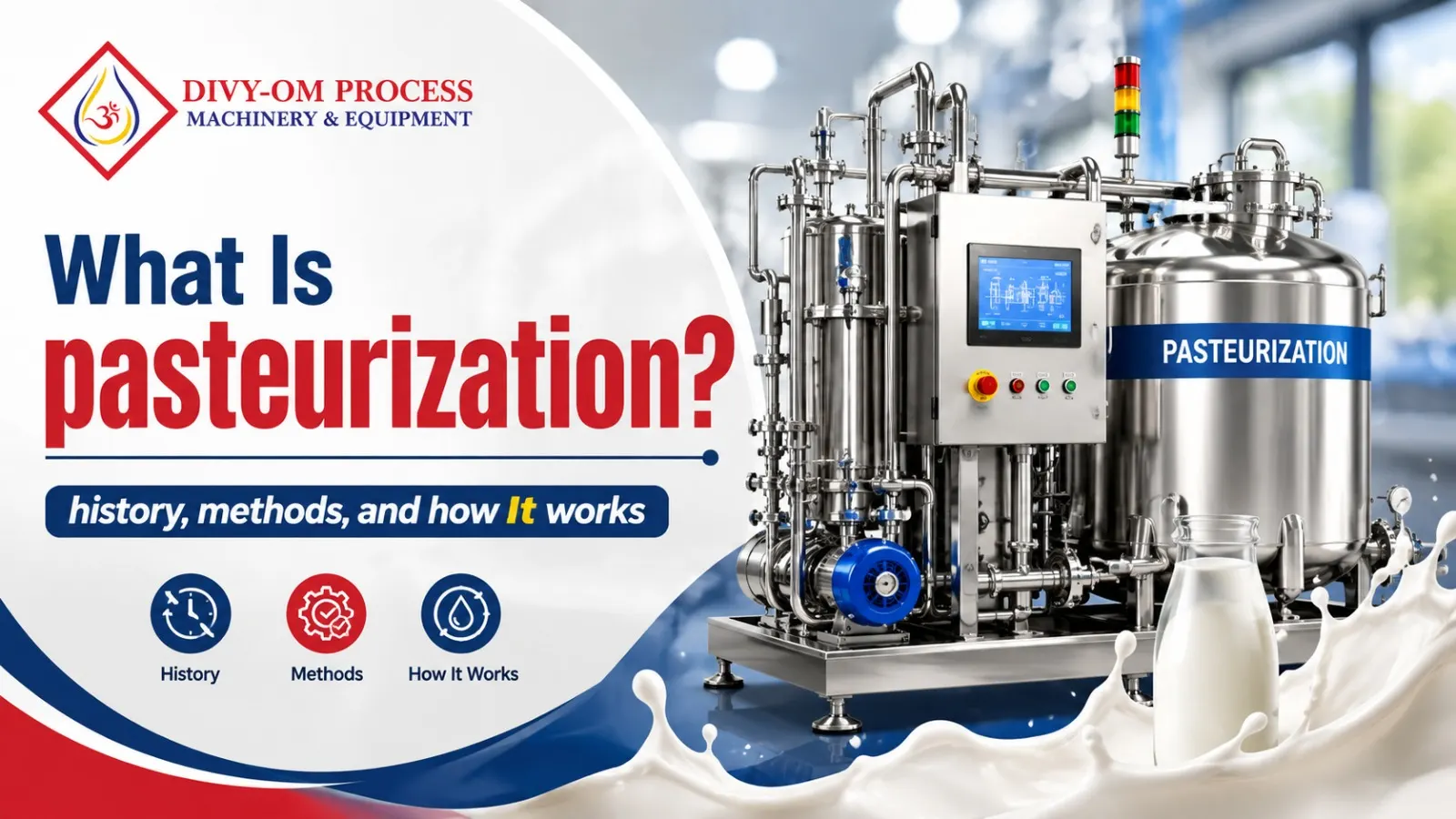
The design of a pasteurization system depends on the type of product being processed. Milk, juices, beverages, sauces, and other liquid products may require different processing configurations. Important components of a pasteurization system can include heat exchangers, balance tanks, holding tubes, pumps, temperature sensors, control panels, and cooling systems. Hygienic design is also essential to help maintain product quality and support effective cleaning.
Divyom Process Machinery can offer processing solutions for businesses involved in dairy and food production. Suitable pasteurization equipment can be selected according to product characteristics, production capacity, automation requirements, and processing conditions.
Pasteurization is a valuable food preservation process that uses controlled heat to reduce harmful and spoilage-causing microorganisms. The history of Louis Pasteur pasteurization began with scientific research into fermentation and product spoilage during the 19th century. Today, questions such as who began pasteurizing milk to kill bacteria and when did pasteurization start highlight the long history behind this important technology. Modern pasteurization has become a highly controlled industrial process that helps food and beverage manufacturers produce safer and more consistent products for consumers. With the right equipment and process design, businesses can improve production efficiency while maintaining product quality.